IT News & Technology update

Provide comprehensive update related to Computer, technology, software, anti virus and another electric device

AMD said to have decided on the manufacturing details of the first Fusion Llano chips

Written by IT News on 3:23 AM

AMD said to have decided on the manufacturing details of the first Fusion Llano chips
Advanced Micro Devices According to planning its first "Fusion" chips to start, and with integrated CPU and GPU core on the same chip, which will be manufactured with a 32nm silicon-on-insulator (SOI) technology. There are many rumors that the chip, but it seems as seconds the world's largest chip maker has finally, her thoughts about her first "Fusion" processors. Additional information on these components are supplied by the company's CEO, Dirk Meyer during a conference call with financial analysts.

"We will have the CPU, called Fusion components of next generation 32nm SOI and bulk CMOS [production] we evaluate the next generation. [...] For the 32nm generation, we evaluate our options, we each generation," says Meyer, quoted in a recent news article Xbite Labs.

According to previous information on these processors, the Llano APU (Accelerated Processing Unit, or AMD CPU-GPU Fusion products call) will be designed as a solution for entry-level market, the pride of up to four Shanghai / Athlon class II nuclei, combined with DDR3 memory controller and a DirectX 11-compliant graphics chip, with third-generation Universal Video Decoder (UVD) and PCI Express 2.0 support for external graphics cards. The processor cores will be equipped with up to 4 MB of L3 cache.

Currently AMD's processors are manufactured using the SOI technology, the GPU of the company's products are manufactured using bulk technology, offered by Taiwan Semiconductor Manufacturing Company (TSMC). This means that the chip maker will be required to redesign the GPU, a GeForce 5000 class graphics chip location on the same silicon as the processor.

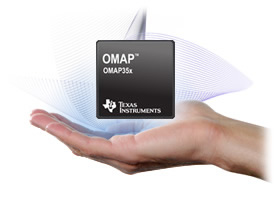
Texas Instruments rolls out the OMAP3530 processor

Written by IT News on 8:12 PM

The market for portable media applications are increasingly interesting, especially as low can run Nvidia's Tegra chips can be used for both the new smart phones and portable multimedia devices power. For this reason Texas Instruments has just announced the introduction of a new, high-performance single-chip solution that can deliver a better multimedia experience. Chip Maker today announced that the OMAP3530 applications processor now can reach speeds up to 720MHz.

The chip designer, the OMAP3530 processor-compatible multimedia devices access to databases, spreadsheets, presentations, e-mail, audio and video attachments faster than before, providing a better experience on the internet multimedia products. The processor is based on the ARM Cortex-A8 core, running at 720MHz and 520MHz with a TMS320C64x + DSP.

One of the highlights of 720MHz OMAP3530 processor chip maker stressed the potential of 720MHz ARM Cortex-A8 core delivering 1400 dhrystones millions of instructions per second (MIPS), while the 520MHz C64x + DSP is said to have been designed to offer more space, optimize audio and video codecs and Custom IP. Otherwise, the processor also with a PowerVR SGX subsystem, which makes 3D graphics acceleration to support display and gaming effects, according to chip maker.

The single-chip solution is built to support a variety of computing devices, including point-of-Sale (POS) devices, web tablets and single board computers. The chip can be combined with the OMAP3503, OMAP3515 and OMAP3525, also designed by Texas Instruments. This will drive manufacturers to operating systems like Windows Embedded CE or a variant of Linux.

The OMAP3530 chip manufacturer is the several options in packaging, in addition to OMAP3530 EVM, directly through the company's website, where you can find more information about the technical specifications of the chip that is.

New Intel Atom processors to be launched next month

Written by IT News on 7:50 PM

Santa Clara, California-based Intel task planning to expand its range of Netbook atom is Z5xx series processors, with the introduction of two new models, Z515 and Z550. Of the two, then a speed of 2.0 GHz Core, making the upcoming Atom processor is the fastest processor in her family. The new processor should further improve the performance of some of the upcoming low-power portable computers based on Intel Atom platform.

Reports on these new processors have been after since the end of last year, but it seems that now HKEPC confirmation from sources within the industry. According to the information contained in a recent news article, the upcoming Atom Z550 processor, a core temperature of 2 GHz. Other specifications of the processor is an L2 cache of 512 KB and a FSB of 533 MHz, while the TDP level will remain at 2.4W as well as the current model Z540, the clock frequency of 1.86Ghz.

In terms of performance and features of the Z515 will be something between the Z500 and Z520. According to the above website, the chip will be a default speed of 800MHz core with a TDP of 0.65W. But thanks to the implementation of Intel's new Bust Performance Technology, the chip will be able to accelerate its core 1.2GHz, thus making TDP of 1.4W.

Apparently, these two processors will be available sometime next month, that is, when chipzilla is also said that plans to release new Core 2 models. Unfortunately, there is no word on pricing, a detail which is available at the launch of the CPU. But 2.0 GHz Z550 prices are likely to be close to the Z540, as Netbook maker with a higher performance alternative to the current nuclear power flagship.

Intel adds two dual-core Celeron CPU models

Written by IT News on 2:49 AM

Intel has recently updated its processor offering with the introduction of two new models, part of the company's Celeron family. The new processor models have been designed using a 65nm technology, and promise that the performance of a dual-core CPU architecture.

According to a recent news article on the site hexus channel, the release of the two new Dual-Core mobile Celeron processors also marks the debut of the first such units delivered from the Santa Clara, California-based chip maker. In accordance with the available technical specifications, these products should be used with upcoming low-power and low cost, portable computer systems.

Both the T1600 and T1700 benefit from a 65nm manufacturing, and boasts 1 MB L2 cache, a 667MHz FSB and a TDP level of just 35W. There is a slight difference between the two models in terms of performance. While the T1600 is depicted a core temperature of only 1.66 GHz (in the vicinity of Intel's highly successful Atom processor), the T1700 is expected to provide a basic speed of 1.83GHz. The Price is wise, these new chips, which are scheduled to be available for $ 80 and $ 85.

The T1600 and T1700 have been listed on the company's plan for some time now, but, despite the recent introduction, they are not expected to be available until Q1 of next year. Given their less powerful specifications and relatively low price point, it is very possible that users will soon be able to buy some low-power and ultra-portable PC that will be operated by any of the above processors. It would be interesting to see a performance test between one of these new models and one of Intel's Atom processor products.

In related news, Intel's Netbook roadmap has recently been reported to get an update, adding a new 32nm successor to the Atom, is scheduled to be released in 2010.

[softpedia]

AMD's Athlon 64 2000 processor on a 790G platform

Written by IT News on 3:04 AM

Not too long ago, a number of rumors made the rounds, saying that AMD was expected to release a new low-power processor, wholly designed to compete with Intel's very popular Atomic CPU. Finally, all the speculation came to an end once and allegations that the Sunnyvale chip maker was not even considering the release of an Atomic competitor at any time in the near future.

On this note, it seems that AMD has strong reasons not to release a new low-power CPU designed for small netbooks and nettops. According to a recent article at Tom's Hardware site, maker already has a decent competitor to Intel's Atom, and it is actually "cheaper, faster and quieter" than Intel's product. After running a comparison test between the Athlon 64 2000 processor and Intel's Atom 230 processor, a single, yet surprising conclusion was reached: Athlon 64 processor is generally better than Intel's solution.

The processors were tested on two desktop platforms, and according to test results, AMD's Athlon 64 2000 has a better energy than Intel's Atom, providing a greater processing power. One of the top strong points of AMD's Athlon was the 790G platform, on which CPU tested. Compared with the 945GC chipset, 790G platforms offers three times as many SATA ports have better integrated graphics and can also support two monitors. There is also support for an HD resolution (up to 1920 x 1200), while the high image quality achieved through a DVI / HDMI port.

As for the noise level is concerned, the Atom is once again surpassed the Athlon processor, which, thanks to the energy-efficient 790G platform, does not require an active cooling solution.

On the downside, Athlon 64 2000 processor has a higher level than Intel's TDP Atom, with 8W compared with 4W for Atom. There is also a disadvantage for energy-efficient 790G platform, which is currently only available with a Microatx form factor, while the Intel platform has a much smaller miniITX. In addition, according to Tom's Hardware, the price tag of AMD processor should be somewhere in the $ 90 range, nearly twice as much as you need for an Atomic processor.

Despite all this, there is only one conclusion to this, and that is that AMD has something to seriously compete with Atomic

Intel's SCH specifications update

Written by IT News on 1:12 AM

One of the main benefits of HP's Mini-Note netbook system is that, unlike all other Atomic-powered netbooks currently on the market, it can support a Windows Vista operating system. This is also one of the reasons for the higher price tag that will attach to the Mini-Note, especially when you compare it with most of its direct competitors. But it seems that some of these netbooks running Intel's Atomic CPU may soon be technically possible to make a Windows Vista operating system as well.

As most of you already know by now, run Vista eats up a large part of the system's resources, while the old Windows XP are less demanding. This means that run Windows Vista on a system with less than 2GB DDR2 memory may prove to be a really unpleasant experience.

Netbook system running on an Intel processor Atom can only be equipped with up to 1 GB of system memory. It is mainly because of Atom's System Controller Hub (SCH) specifications, which does not permit system to equip an Atom-driven entity with more than 1 GB of memory. Ultimately, this is the reason why there are no Vista-capable netbooks powered by Intel's Atomic processor.

Fortunately, according to a new PDF from Intel, an updated version of the System Controller HUB will include support for up 2GB of RAM. It is unclear whether this will happen in the next systems, or if it will be available to all other Atomic-powered netbooks through BIOS update.

One thing is certain, netbooks runs on Windows Vista will certainly be more expensive and, so far their performance is that things may not go as expected. On the other hand, a 2GB netbook would be very good at running a custom Linux-based operating system as well, which could ultimately increase customer interest in netbook market.

Centrino, Intel platform roadmap

Written by IT News on 4:58 AM

It’s about the new Intel's notebook platform, originally announced for the start of Computex show was delayed for several reasons today. However, we will only see a platform for discrete GPUs, and one with integrated graphics and mobile WiMAX is expected next week. Intel says that the new processor will be used many of the major laptop vendors such as HP, Sony, Toshiba and others.

The new platform Montevina says it is 45nm Penryn processor, along with Intel mobile 4 Express chipset, Intel GMA X4500 integrated graphics chip and wireless WiFi module and the support of WiMax. However, while the front of 1066MHz bus Penryn-based processors 35 watt power required to run, three of the new models will be used only 25 watts, and will also have DDR-3 memory function for fast and efficient access to power memory.

Let us look more closely at the platform. First, we have an Intel Mobile Express chipset 4 series, were known as Cantiga (including GL40, GS45, GM45, GM47 or PM45), along with Intel GMA X4500 graphics technology and ICH9M southbridge and offering a front side bus of 1066MHz . Graphics core states to GM45/47, which became the main clock of 533/640MHz, including single and ten shaders, two more than had GMA X3100.

In chipset will come with support for DDR2-667, DDR2-800, DDR3-800, DDR3-1066 and DDR3-1333 SO-DIMM memory modules. It will also contain code-named Boazman Gigabit Ethernet LAN controller 82567LM and 82567LF and NAND flash-memory caching for branded Intel Turbo memory. DisplayPort will have the full support and the motherboard will feature an external connector and support for HDMI, DVI and VGA standards.

Second-generation Intel Core 2 Duo 45nm processors will have basic speeds ranging from 2.26GHz to 3.06GHz and will come with support for SSE4.1, added 47 new instructions for SSSE3.

In Montevina chip is the fifth generation of Centrino, and the first of the series to come up with integrated support for WiMAX. In the lid contains three antennas, which enable connectivity through both WiFi (802.11n) and mobile WiMAX (802.16e). In the Montevina platform allows for three types of connections, including echo peak adapter, and WiFi / WiMAX Link 5150/5350 mini-PCIe, of Shiloh, an Intel WiFi Link 5100/5300 mini-PCIe adapter, and Dana Point, code-named A card WiMAX (802,16).

On top of these, if combined with the built-in technology for security and manageability features of Montevina platform goes under the name "Centrino 2 vPro".

VIA to Launches Nano Processors

Written by IT News on 10:22 AM

Soon after the release of OpenBook, in technologies just started Nano VIA processor family. The new product is based on VIA Isaiah Architecture and by plans to introduce low-power processor market.

Apparently the new Nano processors are built on the successful energy efficient VIA C7 processor family. They are designed to offer as much as four times the performance in that power range. The design of the processor enables it to be used in other VIA C7-based systems, mainly because its pin compatibility. Thus, OEMs and motherboard vendors can easily upgrade their current C7-based systems.

VIA Nano new processor family is specially designed for laptop and desktop computer market, offering optimized to perform the most complex calculations, entertainment and connectivity applications. Apparently this new Nanos will be capable of handling Blu-ray Disc ™ HD video playback and the latest PC games, like Crysis. Maybe VIA is trying to become one of the leading manufacturers of consumer processors, as Intel, AMD and NVIDIA.

Fujitsu built with 65 advanced productivity of manufacturing technologies, VIA Nano processor family has been designed for improved power efficiency. "Via Nano processors represent the next generation of technology, x86, providing the basic building blocks for a new genre of computers optimized solutions," said Chen Wenchi, President and CEO, Via Technologies, Inc

First, new products will be launched in two SKUs, namely VIA Nano L-series and U-series. The first series is intended to include desktop and mobile PC systems and the second series was built for small form factor desktop and ultra mobile devices.

The highest model L-series will feature a clock speed of 1.8GHz and maximum level of TDP 25W, a top U-series model will have a 1.3 + GHz and a maximum level of TDP 8W. No word on pricing just yet, but the products are expected on the market in Q3 2008.

AMD Opteron'barcelona" finally here!

Written by IT News on 12:45 AM


Good news for AMD users specially for Opteron.
The AMD quad-core processor is now available to the markets. eventhough is limited stock, but still can get.
As you know barcelona is code name for AMD quad-core series, for example 2352 is one of Barcelona series.

The Quad-Core AMD Opteron processors with Direct Connect Architecture deliver outstanding performance, optimal virtualization, enhanced power efficiency, and low TCO – all within a consistent footprint, and power and thermal envelopes.

The benefit are:
Enhanced Power Efficiency

  • Quad-Core AMD Opteron processors are the most power efficient server CPUs we’ve ever produced, thanks to Enhanced AMD PowerNow!™ technology and the addition of innovative CoolCore™ Technology. These innovations are designed to reduce total cost of ownership (TCO), data center power needs, and cooling costs by lowering the energy consumption of your IT infrastructure.

Optimal Virtualization
  • Quad-Core AMD Opteron processors with Direct Connect Architecture enable industry leading virtualization platform efficiency. Featuring AMD Virtualization™ (AMD-V™) technology with Rapid Virtualization Indexing, Quad-Core AMD Opteron processors can accelerate the performance of virtualized applications and improve efficiency of switching among virtual machines—so customers can host more virtual machines and users per system to maximize the consolidation and power saving benefits of virtualization.

Investment Protection
  • By leveraging AMD’s Common Core Strategy and Same Socket Technology, Quad-Core AMD Opteron processors are designed to minimize changes to your software and data center infrastructure to protect your IT investment and simplify IT management. AMD plans include a stable consistent roadmap and well-timed transitions to help decrease your IT TCO.

Outstanding Performance
  • Quad-Core AMD Opteron processors are designed for optimum multi-threaded application performance. We start with a native quad-core design—featuring four cores on a single die for more efficient data sharing—and add an enhanced cache structure and integrated memory controller designed to sustain multi-threaded application throughput. Quad-Core AMD Opteron processors provide outstanding processing power and can increase performance-per-watt to improve IT responsiveness while maintaining costs. AMD Opteron processors enable stable, long-term solutions with industry-leading performance and performance-per-watt to simplify your IT management—now and in the future.

€10,000 from Intel for the Winner of University Notebook Challenge

Written by IT News on 8:08 PM

Intel rewards Healthy Solution for the Energy-Efficient Laptop of the Future
Intel launched in April, in the spirit of innovation toward energy-efficient technology, a challenge to European universities to design a device that would be capable of powering laptops by using sustainable and renewable energy sources. After seven months of creative work from the participants, the winners of the Intel University Competition On Renewable Energy (CORE) were rewarded yesterday.
The winners were given €10,000 as funding to support scientific research.

The three members jury had to judge entries from universities in Belgium, Ireland, Germany, Italy, Netherlands and Spain. The three members, Nir Tessler, professor at the Israel Institute of Technology in Haifa, Eszter Morvay, IT analyst, and Ofri Wechsler, Intel employee, judged each entry according to several criteria, as ecological value, ingenuity of design or commercial viability.

The winner of the competition was the Spanish team, which presented a solution based on a pedal machine powered by human motion. The energy produced by the cycling action is turned into electricity by a power electronics converter and this way can power the laptop. The jury considered that this solution dealt with all aspects of the challenge, from ease of implementation to innovative quality of its components and also that it allows for a realistic usage model. The device is user-friendly allowing the user to adopt a flexible rhythm and take any breaks necessary. The power electronic converter is specifically designed to minimize charging time and to keep the energy flow at a constant level.

The Polytechnic of Milan from Italy and Delft's University of Technology from Netherlands, the runners-up will be recognized too for the merits of their designs. The Italian team designed a system that uses hydrogen fuel to power a laptop. This solution is noteworthy for its duration and also for being environmentally clean. Although it can not be found on Earth in its elemental form, hydrogen can be obtained through electrolysis from water. The Netherlands team presented a project consisting mainly of a rocking motion pedal mechanism. Both runners-up received a top of the line laptop.

AMD don't interest in dual-processor platform

Written by IT News on 7:15 PM

AMD has announced that the company is not currently taking into account development of a dual-processor platform. With this statement, AMD takes its hands off the so-much promoted FASN8 platform
and retreats from the competition with Intel on the dual-processor market.

"AMD has discontinued future planning and development of its eight-core enthusiast platform at this time. […] We will continue to support customers that have an existing Quad FX with DSDC and are also working on an upgrade path for those customers. The upgrade path likely won’t be a Phenom-branded product," said AMD spokeswoman, Suzy Pruitt.

In the battle for extreme performance, Intel have raised the stake with their Core 2 Duo and with the Intel Core 2 Quad microprocessors. Of course, AMD could only dodge and attack, so they raised the stake and introduced their Quad FX platform last year; the platform featured two dual-core AMD Athlon 64 FX-70-series processors – a pretty high-end alternative to Intel Core 2 Quad. The promises were that AMD's quad-core powerhorses were to be fully compatible with the Quad FX platform and would allegedly allow users to swap processors at no platform-switching cost.

Of course, Intel had to show who "the man" was and, shortly after the Quad FX episode, they started teasing each other with their own V8 platform, that promised two quad-core central processing units. As if that was not enough for the enthusiasts, Intel dug even deeper and pulled out to surface the Skulltrail platform, which would only work with two specially designed quad-core processors that jump the $3000 barrier each. A pretty salty price, but it'll be worth it, if you are obsessed with your system.

Time is running low for AMD, who failed in delivering hi-speed Phenoms to join the battle against Intel's Core 2 Extreme line. Phenom FX has also been delayed and AMD has left a single quad-core pawn on the table that can't carry more than 2.3 GHz – just enough to eat Intel’s Core 2 Extreme processors dust.

Read about AMD at AMD official website

Intel vPro technology

Written by IT News on 2:46 AM


Intel vPro is a new processor that have ability to be controlled remotely. Intel vPro processor technology helps you increase the proportion of issues you can take care of remotely.

Intel® vPro™ processor technology introduces layers of hardware-based security beyond what you can get from software alone, as well as manageability features that reduce the need for tedious, inefficient deskside maintenance visits for the business PC—a first for managed PCs. Intel vPro processor technology is the industry’s first solution that enables OS-absent manageability in 802.1x and Cisco NAC networks

Software-based security applications typically rely on agents installed on top of the OS to secure the PC. That makes security dependent on the OS, which can leave systems vulnerable. Intel® Active Management Technology (Intel® AMT), a component of Intel vPro processor technology, delivers robust hardware-based security that continues to work even when the OS is not

Improve your ability to troubleshoot, diagnose, and repair business PCs by providing remote-boot functionality and persistent event logs that are accessible even on crashed or powered-down PCs. Proactive alerts even make it possible for IT to know before the user of a hardware failure

Intel vPro key features are hardware based management integration. Typically most business entities support PCs using software agents that reside within the operating system for common tasks such as remote desktop, distributing software updates and enforcing security policies. Hardware based management has been available, but is limited to auto configuration using DHCP or BOOTP for dynamic IP allocation and diskless workstations, as well as Wake On LAN for remotely powering on systems.

read more at intel, wikipedia

Intel inside $100 laptop?

Written by IT News on 6:36 PM

Intel said Friday it will join the board of the One Laptop Per Child program and contribute funding to the project which created and is distributing the XO computers for education. This comes after Intel execs have been critical of the design, and after they designed and promoted a competing child-focused portable, their $225 Classmate PC, a more conventional machine than the radically rethought XO boxen.


Various sources have recently priced the simple Linux portables at $150-$175 each as a result of hardware upgrades, although the program recently said costs should reach the $100 goal soon, and drop further in short order thereafter. Those would make a dandy e-book reader, and put further price pressure on Sony’s e-book readers.


The XO machines now use AMD CPUs. AMD reps said “Intel’s apparent change of heart is welcome, and we’re sure they can make a positive contribution to this very worthy project for the benefit of children all over the world.”

Intel vPro: Intel introducing their new processor

Written by IT News on 12:06 AM

Intel® vPro™ Processor Technology
Intel® vPro™ processor technologyIntel is very fast on upgrading their technology on processor. It seem just yesterday they launched the core 2 duo processor, now they have Intel vpro processor.

PCs with Intel® vPro™ Processor Technology
Simplify the management and security of your desktop fleet with PCs featuring the powerful, professional grade capabilities of Intel® vPro™ processor technology. These include built-in manageability, proactive security, and the energy-efficient dual-core performance of Intel® Core™2 Duo processor. Now IT managers can spend less time managing PCs and more time focusing on strategic initiatives that accelerate business success.

Components
Read more at Intel official website

Intel is working on anti-cheat technology

Written by IT News on 1:58 AM

It looks like Intel is working on an anti-cheat technology, although this is only a research project at the moment and hardly ready for prime time.

The concept is simple: A chipset records all input from the keyboard and mouse at the hardware level — the game also does the same. If the two doesn’t match, then something else is pumping input into the game, and you are probably ‘cheating.’

The general idea here is that, if something tampers with input, it should be flagged. Obviously, the game will first have to support the chipset, as it will have to be the one querying the hardware in order to compare the various input streams.

You can read more about Intel’s anti-cheat technology in The Inquirer.

Personally, I can immediately see some potential issues with this setup. One main problem would be with hardware or software that reads or writes to the keyboard or mouse queue. I wrote a hotkey plug-in for Winamp a few years ago (Winamp KeyControl), and I can just see how this anti-cheat implementation will scream murder at every other key press.

Additionally, I am pretty sure it will be hacked very quickly when released anyway.

Anything to say on the current state of cheating in online games? Join the discussion, or get back to your work!

Intel working on anti-cheat technology

Written by IT News on 11:52 PM

It looks like Intel is working on an anti-cheat technology, though this is only a research project at the moment and hardly ready for prime time.

The concept is simple. A chipset records all input from the keyboard and mouse at the hardware level. The game also does the same. If the two doesn’t match, then something else is pumping input into the game, and you are most probably ‘cheating’.

The general idea here being: if something tempers with input, it should be flagged. Obviously, the game will first have to support the chipset as it will have to be the one querying the hardware in order to compare the various input streams.

You can read more about it here in The Inquirer.

Personally, I can immediately see some potential issues with this setup. One main problem would be with hardware or software that reads or write to the keyboard or mouse queue. I wrote a hotkey plugin for Winamp a few years ago (Winamp KeyControl) and I can just see how this anti-cheat implementation will scream murder at every other key press.

Reduce Maintenance Costs While Increasing the Security of Business Notebooks

Written by IT News on 6:23 PM

Introducing Intel® Centrino® Pro processor technology, for a new generation of notebooks that solve time-consuming, expensive IT problems. New advances in remote maintenance and proactive security are built right into the hardware, so now you can spend less time securing machines and chasing down end-user problems.

Boost security and reduce deskside visits

Now available for the first time in notebooks, Intel® Active Management Technology (Intel® AMT) provides new levels of security to your notebooks with an advanced combination of software technology and hardware-based features:

Quarantine infected notebooks—by disconnecting their OS from the network. Use an out-of-band (OOB) communication channel to deploy remediation software, fix the problem, and bring the PC back onto the network—with minimal interruption to user productivity.

Protect against many classes of malicious attacks—using Execute Disable Bit to provide hardware-based anti-virus protection.

Block incoming threats proactively—identify and stop them before they ever reach the OS using hardware-based inbound and outbound filtering.

Up to 5x faster wireless connection²

Deliver seamless wireless connectivity with multimode support for 802.11a/b/g wireless protocols. And when combined with optional Intel® Next-Gen Wireless-N technology, you get up to 5x faster connection speed and up to 2x the wireless range², making your workforce better connected.

Cut costs and improve support

Intel Centrino Pro processor technology lets you remotely manage notebooks over the network, regardless of system power state and whether or not the operating system is functioning.¹ That increases uptime, reduces costly deskside visits, and frees you up to provide strategic value to your business:

Build IT efficiency—and avoid interfering with end-user productivity by doing a higher percentage of diagnosis and repair jobs remotely and deploying software patches during off-hours when many systems are turned off.¹

Increase reporting accuracy—for licensing and maintenance contracts with hardware and software inventory that is effective even if systems are powered down.¹

Up to 2x increased performance on your notebook

Intel Centrino Pro processor technology provides up to double the performance without sacrificing energy efficiency. The unique features of Intel Centrino Pro processor technology are designed to prolong your notebook's battery life and allow mobile users to work longer and be more productive between charges.

official Intel website click here

Search This Blog

Ads and Sponsored by:


Want to subscribe?

Subscribe in a reader.