IT News & Technology update

Provide comprehensive update related to Computer, technology, software, anti virus and another electric device

ASUS P6W7 WS SuperComputer motherboard

Written by IT News on 2:01 AM
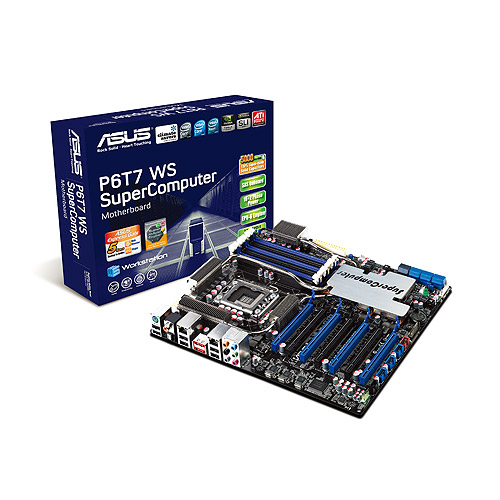
ASUS, one of the world's leading suppliers of computer motherboards, has recently updated its range of X58-based motherboards with the introduction of the new super computer P6T7 WAS model is especially designed for the execution of the current high-end desktop workstations. Coming with support for Intel's fastest processors available today and multi-GPU configurations, the new supercomputer motherboard from ASUS offers an impressive 7 PCI-Express 2.0 expansion slots.

The names of the new ASUS board may be a bit confusing, especially since ASROCK has its X58-based Super Computer Board. However, ASUS 'new administration takes things a bit further, using two NVIDIA NF200 chip, which the Board to seven PCI-Express gen.2 expansion slots, with support for NVIDIA GeForce 3-way SLI or ATI's CrossFireX Quad technologies. Moreover, the Board Supports Intel Xeon E5502, E5504 and E5506 workstation processor and 24GB of DDR3 memory with the help of three Triple-channel ready DIMMs.

To support the performance requirements of today's high-end desktop workstations, the new Council is presented with the Intel ICH10R controller supporting 6 SATA 3Gb / s RAID devices to 0.1, 5, 10 support. In addition, Marvell 88SE6121 SATA controller offers two eSATA ports, while Marvell 88SE6320 SAS controller provides two SAS ports. The Board of Directors of the rear panel sports two external SATA ports, an S / PDIF out, IEEE 1394a, two Gigabit Ethernet ports, six USB 2.0 ports, 8-channel audio and a PS / 2 port.

Besides the high performance specifications and support, the new supercomputer ASUS P6T7 were on board is packed with some of its properties, including Express Gate, EPU, CrassFree BIOS 3 EZ Flash 2, OC Profile and more. Unfortunately, ASUS has not detailed the management of availability and price.

The PS3 cluster

Written by IT News on 5:57 PM

Understanding how black holes vibrates is not the easiest of tasks, and to calculate all possible outcomes of different scenarios, variables and surprising element is a very demanding process, in the form of computer resources required. That is why some of the smaller laboratories perform calculations in the field cannot afford to pay thousands of dollars to supercomputer grids, too little time to run their simulations.

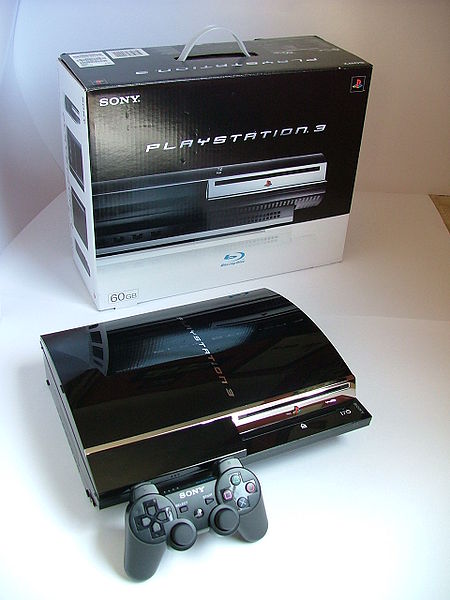
That is why researchers at the University of Alabama in Huntsville, and University of Massachusetts at Dartmouth, decided to invest in a more unconventional computer, Sony's PlayStation 3. Researchers connected about 16 consoles together, at an estimated total price of a bit over $ 6000. With this rig, they could run tens of simulations on the vibration of black holes and put so many variables that they wanted in the process.

What makes this so cost-effectively possible for the two universities is the fact that if such a solution had not thought of that, they would have paid $ 5000 per simulation at various supercomputer labs. And it goes without saying that a couple dozen simulations would have required significant investment.

"You can build a cluster like this for maybe $ 6000, and then you can run the simulation as many times as you want at no extra cost. Science budgets have been sharply declining over the past decade. Here is one way that people can do science projects cheaper ", says the manufacturer of the PS3 cluster, Gaurav Khanna, a physics professor at the University of Massachusetts.

"Think of a clock. Bell rings, but in the end it will be quiet. The energy that goes out with sound waves is energy clock loses. A black hole does exactly that in the gravitational constant waves instead of sound waves. The black hole that WOBBLING emitting gravitational constant waves. When these vibrations OUT you get a quiet black hole "concluded University of Alabama assistant physics professor, Dr. Lior Burko.

Nehalem CPUs Support 288 GB of DDR3

Written by IT News on 6:16 AM

By: Bogdan Botezatu, Hardware Editor

Intel's upcoming processors Nehalem as much promise in terms of productivity, while the chip manufacturer did not give a complete picture. Among the bits of information in Nehalem puzzle, Intel has hinted in chip users' capabilities to the large amount of memory, namely 288 GB of RAM purely DDR3.


One of the systems that were displayed during last week's Intel Developer Forum consisted of a dual-socket, six-channel DDR3 Tylersburg DP Gainestown based motherboard Beer in mediation on the part of the company. , Directional at the server market, the new board comes with six DDR3-1333 DIMM sockets on the processor, which means that it can support at least 12 memory modules.

Memory hippopotamuses were built with MetaRAM Hynix memory modules. Needless to say, these figures should be admired, and Intel took care to run its tests without the protective shell ship. The system stripped to the bone, and will only go to one of two CPU sockets are occupied, and the only one with 8 GB MetaRAM Hynix DDR3 DIMM.

This could be the beginning of a new generation of motherboards that can take maximum 9 DDR3-1066 channels on the GPU, or 18 channels on board. Given the fact that 16 GB of memory modules can be created when fill all 18 channels with 16 GB DIMM memory, Intel may reach the plateau, at least 288 gigabytes of RAM.

Of course, such an amount of system memory will not be used for the Counter-Strike shootout with the guys on the local network, but there are many applications that could benefit from the incredible memory horsepower. The chip manufacturer demonstrated miniature supercomputer working memory-intensive programs.

The test was carried out using the recently introduced ATI FireGL 7700 DisplayPort working graphics card, but let us not forget that Larrabee silicon is just around the corner, and it comes with an impressive increase in graphics performance.

Search This Blog

Ads and Sponsored by:


Want to subscribe?

Subscribe in a reader.