IT News & Technology update

Provide comprehensive update related to Computer, technology, software, anti virus and another electric device

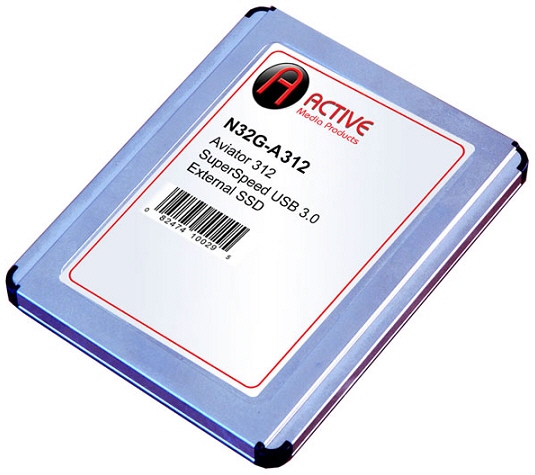
New SSD features USB 3.0, courtesy of Acrive Media Products
Written by IT News on 4:14 AM

New SSD features USB 3.0, courtesy of Acrive Media Products
USB 3.0 is slowly penetrating the market, including a growing number of manufacturers to launch new products designed to exploit the performance and capabilities of the new interface. Thus, the Active Media Products has just announced the introduction of the new USB 3.0-compatible 312 Aviator external solid state drive. Boasting the new USB 3.0 interface, flash-based storage product is expected that users with increased performance and backward compatibility with USB 1.1 and USB 2.0 standards.

"Aviator 312 SSD's is a groundbreaking product with performance that are eight to ten times faster than today's fastest USB 2.0 flash drives," says Jerry Thomson, Vice President Sales at Active media products. "For those who do not have hours to copy large files, there is nothing close to the waste Aviator 312 speed. "

The new Flash-based, high-performance storage solution is designed to offer customers a choice of 16GB, 32GB and 64GB SSD, with a MLC (multi-level cell) NAND flash memory chip. The drive measures 70 x 54 x 5 mm and is compatible with the previous-generation USB interface, a feature that will be available on all USB 3.0 devices. In terms of performance, the new station, said to deliver up to 240MB / s and 160MB / s read and write, respectively. These benefits can be achieved only if the USB 3.0 interface available on both the host and the appropriate units.

The new station is scheduled to be available later this quarter for a price of U.S. $ 89, U.S. $ 119 and U.S. $ 209, respectively. The unit will add a few other USB 3.0 devices, such as the recently launched Seagate drive.

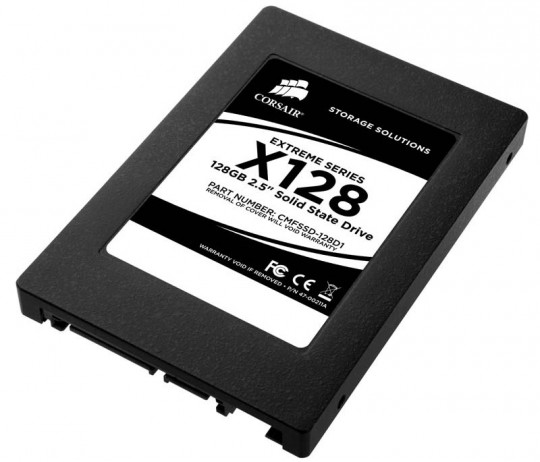
Corsair intros new Extreme SSD Series

Written by IT News on 9:38 PM

CorsairCorsair has recently updated its range of high performance Solid State Drives with the introduction of a new Extreme Series line. According to the company, its new family of high-end SSDs will be available in storage capacities of 32, 64 and 128GB. According to Corsair, the new line of SSDs designed using the new Indilinx Barefoot controller to storage with performance of up to 240MB / s read and 170MB / s write. This places Corsair latest offer some of the highest performance SSD solutions on the market.

"The combination of Indilinx Barefoot controller, Samsung flash memory and 64 MB of onboard cache gives blisters, stutter-free performance, eliminating bottlenecks that traditional mechanical hard drives," says Jim Carlton, VP Marketing at Corsair. "The New Extreme Series SSDs are ideal for use as primarily operates in computers and laptops, and RAID 0 configurations in high-performance computers for enthusiasts who want extreme performance."

The new Corsair Extreme SSD series is built with a mixture of the Samsung MLC NAND Flash memory and the new Indilinx Barefoot controller, which allows a maximum reading speed of 240MB / s and write speed up to 170MB / s. In addition, the new discs with the end-user upgrade firmware that makes it possible to provide support to the next TRIM command in Windows 7. The upgrade will be made available via their own website.

Despite the fact that Corsair does not have full information on the prices of the new series, Slash Gear reports that these devices are already available for the same price as U.S. $413.99 U.S. $249.99 and U.S. $125.99 for the X128, x64 and x32 models, respectively.

Flash and 3D stuff

Written by IT News on 9:44 AM

Have you ever use FLV files? As long as I know FLV is stand for Flash Live Video or in general we already know Flash animation, the use is in header of the web or just introduction pages.

I have found a nice blog that specifically talk about FLV and Papervision, the article is really good for knowledge and nice looking. Honestly I don’t have enough information whether this blog manage by personal or organization. The contents is most original, while somehow if we search through google we will found it the same topic in other general blog.

But this Papervision3D blog is only highlight a contents that related to Flash and other resources that also related to 3D suff. Don’t ask why I put and post this into this blog, as usual when I found a good information and I think other will need it then I write it. Beside, this blog has good in design.

How Flash Memory Works?

Written by IT News on 7:02 AM

Flash memory are solid state electronic devices with random access memory capabilities, used for fast digital information on storage. They are used in a wide range of applications such as storage of BIOS living in a typical digital computers, as the winner of the capacity of hard drives for digital cameras and memory cards for laptop computers and video consoles.

The technology used to produce flash service is based on EEPROM (electrically programmable with erasable read-only memory) chips, which comprise the memory banks set up in storage boxes made in the network of columns and rows. A basic cell has two baggage MOS-transistors to each intersection, and are separated by one layer of oxide. The two transistors are known as floating gate and control gate.

When the floating gate is tied to the line of cellular stores edin'1 "bit logic. The value promeni'0" logic through a process known as the Fowler-Nordheim tunneling, which changes the distribution of electrons inside the floating gate. When the charge relates to floating gate of the column, it passes through the transistor, then sewage system land in which the formation of a negative charge is created by the other side of the oxide layer.

After Electric charge forms, no other electrons can penetrate the layer and on the other side due to electrostatic forces, thus establishing a distribution slightly higher fee of 50% between the floating gate and control gate, which records kato'1 "logic. However, when the fee allocation between the two transistors falls below 50%, then the cell is evaluated as baggage edin'0" bit logic.

To delete flash memory and return to electronic distribution inside it, a high-voltage charge is used to generate electric fields that study of all cells na'1 "logic. This can be done in certain blocks of memory or the whole chip. Flash services may retain the information only on condition that they have power, however, flash RAM can maintain the information stored without requiring any additional sources of energy.

There are several types of flash service, each with different characteristics in terms of size and storage capacity, but they all shares roughly the same properties. They are solid state devices, thus, which have no moving parts to keep them quiet, have quick access speeds and are relatively small in size. They consume low amounts of power while in use and can provide storage capacity ranging between a few kilobytes of several tens of gigabytes.

McAfee warns about possible exploits

Written by IT News on 11:03 AM

Hack and spammers seem to work popular in an attempt to search for vulnerabilities in various applications. It appears that the recently discovered used to try to take advantage of one unpatched Adobe Flash vulnerability. According to one post yesterday of McAfee AVERT Labs, the security company has received a number of samples used by many different sources of spam domains.

McAfee were samples of these allegations very seriously and began investigations on the matter. It seems that while you browse the sites that serve these SWF spirit McAfee found a link leading to mass recently reported hacks. As in early May reported attacks infected sites, reference external script, which for this new Adobe Flash-related vulnerability appears to be one SWF file. Apparently this SWF file leads to a similar name WIN% 209,0124,0 i.swf (WIN 9,0124,0 i.swf). The file is now offline.

McAfee is unable to confirm that this last SWF file is an attempt to take advantage of the aforementioned Adobe Flash vulnerability, but Symantec, referred to the same domain to serve the earlier exploit. Besides the opening of Symantec, without mentioning any other domain and 2 spirit implies called WIN% 206,0,79,0 ff.swf (WIN 6,0,79,0 ff.swf) and win% 206,0,79 , 0 ie.swf (WIN 6,0,79,0 ie.swf), also offline.

McAfee draws three conclusions from all of the above files. Apparently, the various spirit are built for different versions of Adobe Flash, namely 9.0.124.0 and 6.0.79.0, which are quite old. Versions of operating are suspected to be either available or under development and is expected to focus on other operating systems except Microsoft's Windows. The latter conclusion is that it uses specially designed for the two most used Internet browsing applications, namely Internet Explorer and Firefox.

At present there are no more details available for this security vulnerability, but McAfee promises to provide consumers with more information, as the investigation moves along.

Adobe Overstates Its Intentions with the iPhone

Written by IT News on 10:54 AM

By: Filip Truta, Apple News Editor


Tuesday saw Adobe CEO Shantanu Narayen saying that Apple iPhone is to obtain flash from San Jose-based Software Company. This, of course, is an exaggeration, as Adobe also needs approval from Apple and recommendations on how to do so.

This Adobe position on Tuesday: "We are also committed to experience flash iPhone, and we will work with Apple. We appreciated SDK, we can now begin to develop flash player himself, and we think that benefits our joint customers' Shantanu Narayen said during a conference call to announce quarterly earnings on Adobe.

Meanwhile, Adobe realized that Apple's support is crucial to obtaining the outbreak at the iPhone. There's just one little problem: Apple is not interested in obtaining the outbreak that child: Job once said, the iPhone "needs something much better than the current flash player that Adobe does for cellular phones. The Flash Player option that fits the bill are for devices, such as portable computers, which more than iPhone, as a consequence, he performs too slowly on the iPhone."

If Adobe can not do it himself, Apple sure is not going to reduce its schedule to study the issue. Adobe clarification on (Wednesday) at Narayen… comments:

"Adobe is an assessment iPhone SDK, and is now beginning to develop in such a way to bring the Flash Player for the iPhone. However, to bring the full capabilities of flash iPhone Web browser experience, we need to work with Apple for the fact that the above is available through the SDK and the current license around. "

Ultra-Fast memory with Quantum Dots

Written by IT News on 5:37 AM

By: Gabriel Gache, Science News Editor

There are two main types of random access memory currently on the market worldwide. The Flash memory, the most widely known as a portable memory and dynamic random access memory used in personal computers. Both have drawbacks, but they complement each other. For example, the Flash memory is fragile, but they are very slow in writing data. On the other hand, DRAM memory are volatile and have high speed recording.

The problem is that there is no quick solution to create flash memory technology in the semiconductor industry. In addition, cooperation between the Technical University of Berlin and Istanbul University argues that the ultimate Flash memory, information can write only a few nanoseconds. Martin Geller, from the Technical University of Berlin, said that: "Flash memory, which is now on the market-driver in the semiconductor industry, and everyone knows that from memory, digital cameras and mp3 players, has been slow write time. Our quantum-dot based on memory can provide long-term storage without the energy consumption of Flash memory, as well as fast write time and better scalability for real devices. "

Andreas Marent, Geller colleague related that they have developed the first prototype was almost as fast as DRAM devices, but to improve it, quantum dot memory can be written in only one picosecond that 100 times faster than the fastest DRAM device .

The prototype design

The device was constructed from indium arsenide semiconductor gallium arsenide substrate on. Despite the fact that the substrate is a "p-doped ', the second layer of gallium arsenide, indium arsenide covering quantum dots is the" n-doped', thus restoring the basic structure of compounds within pn diodes, while the flow of electrical permit a current only in one direction. Further more, the property of the diodes allows them to act as capacitors and, in certain circumstances.

For example, if the electric current applied across the quantum dot-capacitor diode, it will become electrically charged. Level storage charge indicates that bit of information, quantum dot Holding libo'1 'ili'0'. Small electric charge predstavlyaet'1 'bit , while kak'0 'presented through high charge capacity.

Although the speed of the device almost 100 times more than the typical PC RAM, its speed actually slower than that, in connection with the experimental setup. Geller speculates that the near future could bring it to a speed of one nanosecond - 20 times faster than memory, and even a few times picoseconds physical characteristics of all settled.

Search This Blog

Ads and Sponsored by:


Want to subscribe?

Subscribe in a reader.