IT News & Technology update

Provide comprehensive update related to Computer, technology, software, anti virus and another electric device

New LaVie Light LUI netbook from NEC

Written by IT News on 8:29 AM
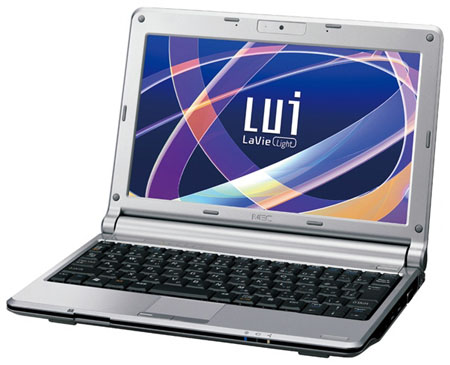
NEC looks to further expand its range of ultra portable netbooks Lavia Light with the introduction of an Intel Atom-based model with a 10-inch display. The new system, called Lavia Light Lui recently tipped by the Tokyo company and is another netbook with a standard list of technical specifications similar to most competing systems currently on the market. The expected sales in Japan, the new netbook look at a number of benefits touted by an 8.5 hour battery life.

Even if it comes at a time when the netbook market is already overcrowded, the Lavia Light Lui looks to compete with all the Atom-based systems in the present situation. Packing group an Intel Atom N280 processor clock at 1.66GHz with 1GB of RAM, the 10.1-inch solution has the same technical specifications as the newest netbooks on Intel Atom platform. Moreover, the system is shown with 1 GB of RAM, a 160GB hard drive and less estimated integrated Intel GMA 950 graphics chip.

For connectivity, the netbook offers pretty much what to expect from a computer in its category, a 10/100 Ethernet LAN port, WiFi and Bluetooth 2.1, an SD memory card reader and a 1.3MP webcam. Boasting Microsoft's successful and well-known Windows XP SP3, the new model is said to provide users with a battery life of 8.5 hours, which is quite impressive, even for a netbook.

A weight of only 1.32kg, the new NEC solution is expected to be available in Japan next week, July 9. Unfortunately we have no information on netbook pricing and this will be made available in some other parts of the world.

NEC world's first USB 3.0 host controller

Written by IT News on 3:18 AM

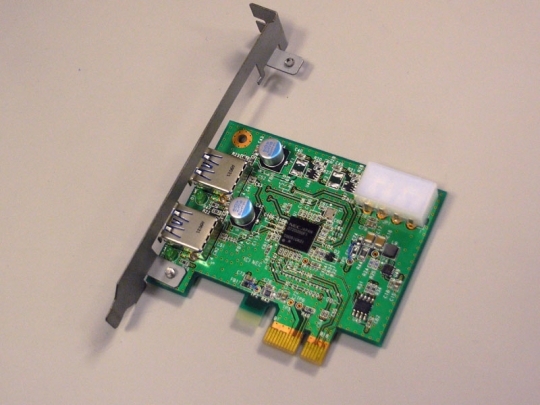
In support of the industry's rapid introduction of new technologies, NEC Electronics has recently announced the introduction of the world's first Universal Serial Bus (USB) host controller to support the new Super-Speed USB 3.0 standard. According to the company, the new controller is designed for future computers, external hard drives, portable electronic devices and thumb drives with support for a higher performance transfer solution. The technical specifications for the new Super Speed USB 3.0 standard, the new NEC μPD720200 chip is fully compatible with USB versions 2.0, 1.1 and 1.0 of the USB standard.

The industry's next-generation USB standard, also known as USB 3.0, is designed to complement the performance of USB 2.0 on the market, while maintaining backward compatibility with current standards. According to available data, the new standard is capable of supporting transmission speeds of up to 5 gigabits per second (Gbps), which is essentially a 10-time increase in speed over the last USB 2.0 solutions. The technology can provide 25 GB of video content to be transferred to a Blu-ray Disc, which normally leads to a remarkable performance increase compared with current USB 2.0 standard, with a speed of 480 Mbps.

NEC's commitment to the development of the world's fastest USB standard dates back to 1996 when the company is one of the USB Implementers Forum. Since then, NEC Electronics also deserves praise for is the first company to a USB 2.0-compatible host controller chip, with the introduction of μPD720100 device back in 2000.

With the launch of the new μPD720200, NEC also offers its support to the new standard and PC suppliers and products to take advantage of new and improved USB 3.0 technology. This solution should further improve the results of a number of computers and other USB devices.

NEC plans to pull away from the worlwide PC market

Written by IT News on 1:33 AM

NECNEC, one of Japan's leading makers, recently announced that it intends to reorganize its business and that the computer is about to disappear from the market outside the Asia-Pacific region. According to the company is the main reason for the recent decision is a slum ping demand and strong competition. As a result, NEC will focus on its PC sales in Asia Pacific and the market will also be forced to cut part of its workforce worldwide.

According to preliminary data, NEC expects a net loss of approximately 290 billion yen ($ 2.96 billion) for the year ending March 31, 2009. In addition, the company plans to accelerate its restructuring plans, which include a withdrawal of the weaker, and to reduce its workforce by approximately 20,000 employees worldwide. According to NEC, the latest restructuring plan is the result of strong competition that has had to manage from larger competitors such as HP and Dell.

NEC will withdraw from the PC in Europe, Africa and the Middle East, because of slum ping demand and fierce competition. The decision seems justified, given that the global PC business, with 3 million personal computers, only one sixth of the NEC is that sales outside of Japan.

The news should ultimately benefit all the main suppliers of computers, such as HP and Dell, which now has a smaller competitor to worry about. On the other side of things, a market with more competitors can benefit the end user, has a wider range of options and can ultimately get the best offer.

NEC has made an effort and has also entered the emerging market for small size, low power portable computer systems, also known as netbooks. The company's products, dubbed Netbook Lavia, designed around the same Intel Atom platform, as most of its competitors in the market, making it difficult for the NEC to establish itself as a leading supplier of Netbook.

Search This Blog

Ads and Sponsored by:


Want to subscribe?

Subscribe in a reader.