IT News & Technology update

Provide comprehensive update related to Computer, technology, software, anti virus and another electric device

Corsair rolls out new DDR3 memory kits for Core i5 processors

Written by IT News on 10:08 PM

Corsair, one of the world's largest suppliers of high-performance memory solutions, has recently announced the introduction of some new memory products, designed to provide support for the upcoming Intel P55 platform and next generation i5 Core and Core i7 processors. These new memory modules are available in capacities of 8 GB and 12 GB kit, which provides support for the next generation of Intel processors for desktop computers. Moreover, for better performance, the new
DHX modules are equipped with their own company and cooling technology, the new American Racing Blue fins and highlights.

"Windows 7 early adopters and advanced users require only 8 GB and 12 GB of memory solutions to optimize their computer use," said John Beekley, Vice President Technical Marketing at Corsair. "The 8 GB and 12 GB configurations, these advanced users get the most potential of high performance equipment to get, especially if they often alternate between consuming tasks such as gaming and video production. "

Fremont, California-based memory maker, the new memory kit is available in both dual-channel configurations and Triple channel, which supports all high-performance Intel platforms. Dual-channel configuration, part CMD8GX3M4A1600C8, is designed with four matched 2GB modules, optimized for the upcoming P55 motherboards, some of which have already begun to make his debut. The CMD12GX3M6A1600C8 triple-channel configuration designed with matched 2GB modules for high-end X58 platforms. Both memory kits for Intel XMP-certified profiles vault and 1600MHz speed and CAS latency settings at 8-8-8-24.

Unfortunately, the memory vendor that no information on availability and price of the new DDR3 memory kits. But we feel strongly that they will be available somewhere around the official launch of the new Intel platform.

Super Talent rolls out new low-profile DDR3 memory module

Written by IT News on 3:47 AM

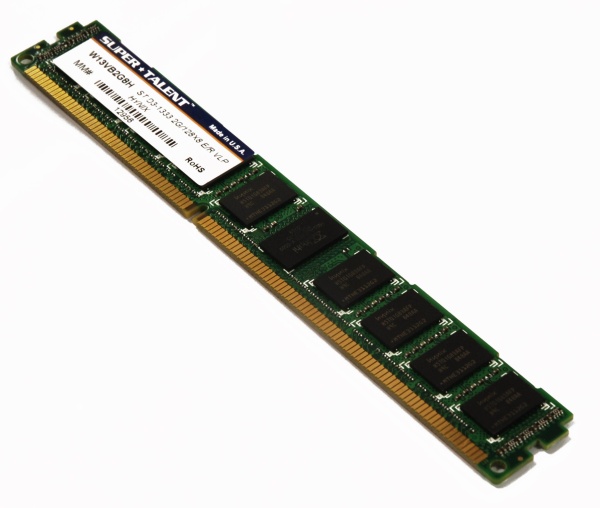
one of the world's leading suppliers of flash-based storage and DRAM memory modules, today announced the launch of its new, very low profile (VLP) DDR3-1333 Registered DIMM, specifically designed to meet and design of the current server. The new modules are targeted at servers with compact and low profile cases, with the results of the latest DDR3 memory technologies.

"We have this product for high density servers and embedded systems where space within the chassis is very limited," said Super Talent Marketing Director Joe James. "VLP modules also useful in 1U servers because of their small physique, improves airflow in the chassis."

According to the technical specifications for these new modules from Super Talent, customers will benefit from the outcome of the DDR3 memory chips on a module that is registered only 0.72 cm long, about half of what a standard DDR3 module measures. In addition, low profile design of new solutions is also a noteworthy feature that should be considered in relation to shipping and the environmental impact of the modules. Volga Super Talent, the VLP DIMM's gebruiken 40% less PCB materiaal te produce a weegt ongeveer 20% less in vergelijking met Standaard DDR3 geheugenmodules.

Like all of the company server DDR3 memory, the new VLP modules are designed with a built-in JEDEC standard thermal sensor in EEPROM, designed to measure the temperature of the module. This feature ensures that the module operates within normal parameters and gives a stable result for the server.

No word on price yet, but Super Talent the new module, part number W13VB2G8x already undertaking OEM sales force.

Samsung starts mass production of the industry's first 2Gb 40nm memory chip

Written by IT News on 8:44 AM

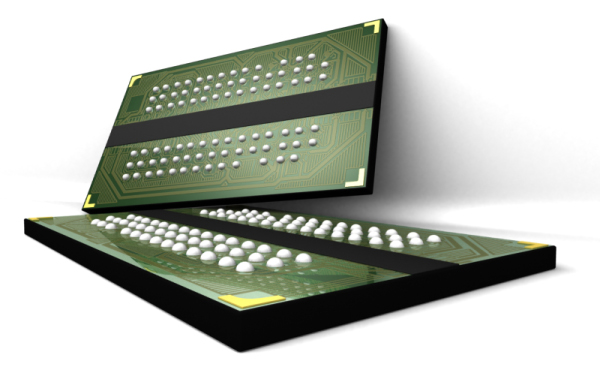
Samsung, the world's leading innovators in advanced memory technology, recently announced that it successfully launched mass production of the first two gigabytes (GB) DDR3 devices, are designed by efficient 40nm technology class. With the announcement of the company further strengthens its position as an innovator in the memory industry as its customers with an efficient production that provides about 60 percent productivity increase in production more than previous generation 50nm process.

"We see market adoption of DDR3 in motion and courtesy of the early registration of 2Gb DDR3 with the most efficient DRAM manufacturing technology available today," said Jim Elliott, Vice President, Memory Marketing, Samsung Semiconductor, Inc. "This will show the way for a new standard for premium environmentally friendly DRAM solutions offer the most advanced, low power RDIMM for servers everywhere."

The company announced that it would use the new class 40nm chip at 16 GB, 8 GB and 4 GB RDIMMs to servers and UDIMM (unregistered in-line memory modules) for workstations and desktop computers. It will also SODIMM (small summary dual in-line memory modules) up to 4 GB for use in laptops, for customers with complete memory to offer the company's latest memory chip. According to Samsung, the new 2Gb chip is designed as energy-efficient solutions for high-density, high-performance memory and can support data speeds of 1.6 gigabits per second (Gbps) of 1.35 volts.

According to a recent report from market research firm iSuppli, 2GB DDR3 is expected to account for 82 percent of the total DDR3 DRAM market in terms of units sold in 2012. Next year, these new chips are expected to become mainstream DDR3 DRAM product, Samsung's move is a special interest, managed to be the first to mass-produce these chips.

Kingston launches new HyperX fan for overclocking memory

Written by IT News on 11:16 PM

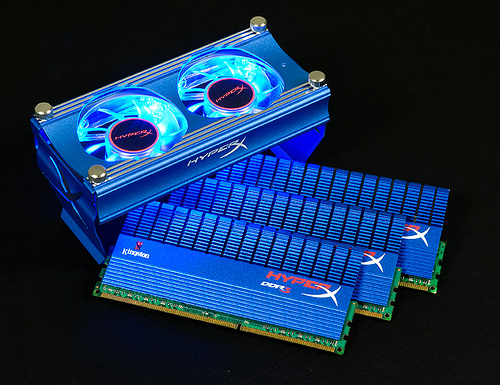
Following the introduction of the new series of "value" mainstream SSDs, Kingston Technology also introduced a new accessory for high-end range of HyperX memory modules. This new product HyperX Fan specially built for the company's latest HyperX, high-speed memory module, an advanced cooling solution to improve the life and overall performance. In addition, the new HyperX
Fans can overclocking enthusiasts to further enhance the overall performance of their system by adjusting the frequency of the memory modules.

"At LAN parties, and benchmarking events in the world HyperX enthusiasts said they wanted to have something nice to look cool mind," says Dara Sunday, HyperX product manager, Kingston. "We have listened and developed this fan as the perfect complement for both standard and higher T1 HyperX series modules. Hip the blue lights give it a Bling factor is the difference between first and second place in a system build.

Like many other memory suppliers, Kingston has its own line of high performance memory modules, catering to the needs of PC enthusiasts and high-end PC users. This is the case with Kingston HyperX range, including a series of modules designed for overclocking of high-performance desktop platforms. The latest product to join the high-end family's new HyperX fan, as shown by two 60mm fans working at a low noise level of 25 dBA.

Available both as a standalone product and as part of a package that also 6GB Kingston in 2000 - and 1800MHz triple channel memory kit with T1 heatspreaders for Intel Core i7 systems. These new cooling solutions are designed with eight small blue LEDs as impressive lighting effect when the fan is switched HyperX.

As a standalone product, the new Kingston HyperX Fan will be available for an MSRP of U.S. $ 23.

Samsung announces first 32GB moviNAND Flash, developed using 30nm technology

Written by IT News on 4:07 AM

Samsung announced today the shipment of its first 32GB moviNAND, the highest density embedded memory card is designed with Samsung's next generation 30nm technology. The new product will allow mobile phones and consumer electronics vendors to improve performance and capacity for its future products, which allows users to store large amounts of multimedia, including video, games and other files. After the announcement of Samsung, mobile phone manufacturers are expected to announce their updated products using the new 30nm 32GB moviNAND Samsung.

"The consumer unquenchable thirst for possession of large amounts of data now include video in a big way, which means rapidly increasing demand for higher density storage," said Jim Elliott, Vice President, memory marketing, Samsung Semiconductor, Inc. " Samsung has taken the initiative to provide OEMs with the highest density flash storage produced with the most cost-effective technology around - 30 nanometers. "

According to Samsung, the new 32GB moviNAND succeed doubled the capacity of the previous generation of moviNAND embedded memory, taking advantage of the new 30nm production technology. Samsung earlier moviNAND embedded memory card is currently produced using 40nm technology and provides a maximum of 16 GB storage capacity.

Available in capacities of 16 GB, 8 GB and 4 GB, Samsung's new 30nm-based moviNAND is designed for eight-class 32GB Samsung 30nm NAND chip, a MultiMedia Card (MMC) controller and firmware. According to Samsung, the new moviNAND is using a high-speed interface which is jointly developed by JEDEC and MMCA (MultiMediaCard Association).

Demand for NAND flash used in the 32GB and 32GB more memory cards are expected to grow sharply in 2013, according to research firm iSuppli. As the figures show that around 72 percent of the total cards sent will be used in 32 GB or more memory.

Micron validates DDR3 memory for Intel Nehalem Xeon processors

Written by IT News on 1:58 AM

Intel's highly anticipated launch of next-generation Nehalem-based Xeon 5500-series processors, a system supplier for the delivery of its latest offerings, powered by Intel's latest data. But the benefits of a high-performance server systems, users need the best and most reliable hardware solutions, including storage and warehousing. On the server's memory, Micron is a trademark as recognizable as the company continues to develop new solutions that enable higher performance. In this sense, Micron has recently announced that its collection of DDR3 memory, the server has been validated for the latest Intel Xeon processors.

"The industry has already adopted the deposition of DDR3 adoption, and we are the target for the transition to take place this year, says Michael Sporer, Director of Marketing for Micron Enterprise segment." An important catalyst in this transition is the introduction of the Intel Xeon processor platform, our server OEM customers with the ability to design an integrated, high-performance storage architecture. "

The company can now Nehalem Xeon-validated DDR3 memory modules come in 1, 2, 4 and 8-gigabyte at a rate of 1066 Mbit / s and 1333 Mbit / s. In addition, Micron also announced that its wholly-owned subsidiary, Lexar Media also has validated its decision mark DDR3 modules are now ready for use within Xeon powered server.

"Intel Xeon processor 5500 series is the most important architectural leap second since the Pentium Pro processor has almost 15 years," said Ali Sarabi, director, industry initiatives and path finding, Intel Corporation. "Micron and major suppliers are the key to memory and ecosystems, their products approved on Intel Xeon Processor 5500-series will be an important contribution for the DDR3 ramp on the market. "

Unlike Intel's latest generation of Xeon processors, the new solutions that have been developed to the memory controller on board, a feature that allows the system to improve performance through better communication between the processor and memory. These server systems are used in the growing market for cloud computing, including multiple operating systems on a computer that is sharing all resources.

OCZ unveils new XMP-rated SODIMMs

Written by IT News on 1:56 AM

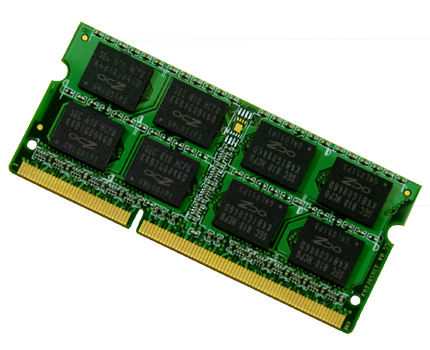
The pace of technology grows, the computer system supplier to the user with some of the most powerful laptops on the market. These machines are equipped with the latest hardware technologies, including Intel ® Core ™ 2 Extreme mobile processors and advanced memory modules such as OCZ reboot XPM certified SODIMM. These new modules have been specially developed for Intel Extreme Memory Profiles, computer fans to enjoy the latest notebook computers solutions.

"XMP is crucial for the outcome, what is it for 3D gaming, and the introduction of profiles, allowing on-the-go enthusiasts who most of its mobile Intel platforms," said Dr. Michael Schuette, vice president of technology development at OCZ Technology. " As a result of our collaboration with Intel from the beginning of mobile XMP concepts, we are now releasing High Performance 2GB SODIMM a compromise solution to complement Intel's mobile computing platform for maximum benefit. "

The first of society XPM SODIMM memory solutions in the form of new CZ DDR3 PC3-8500 4GB kits and 2GB single modules. These are designed to work with 1066MHz CL 6-6-6 latencies, and are compatible with Intel Core 2 Extreme processor family and the Centrino 2 platform. The latest solutions from OCZ makes computer enthusiasts, with an option to upgrade their portable gaming rig, which boosts the overall performance of the system.

OCZ, the new 204-pin SODIMM is fitted with Intel Extreme Memory Profiles (XMP), an exclusive set of SPD (Serial Presence Detect) settings so that a quick solution to upgrade high-end systems. It assesses the work at 1.6 volts and has a lifetime warranty. Unfortunately, the memory manufacturer has no information on the pricing of the new XPM SODIMM memory.

Qimonda is plan to be GDDR5 future

Written by IT News on 5:35 PM

Most of them already know by now, AMD is the first graphics card manufacturer to introduce GDDR5-activated card. However, one thing that might have gone from unknown in this is that AMD has managed this through partnership with Qimonda memory chip maker, who back in May, announced that it had begun shipping GDDR5 memory chips in Sunnyvale company.

On that note, the company recently announced that feels confident about the future of GDDR5 memory and that it has a big plans for the composition based on it. The European manufacturer intends to stay ahead of its competitors and to continue delivering GDDR5 chips. Although the company is currently the largest customer AMD, things may soon change, especially after Qimonda has already announced that work on the introduction of higher-capacity chips. Indeed, 1GB GDDR5 chip is scheduled for the fall arrival, which can not be but great news for AMD.

The company's memory chips currently used in our current AMD graphics card, and speculation that it is the same will occur with the upcoming HD 4870 X2, as i. Indeed, the new card will provide consumers with 2GB memory of Qimonda new standard memory - one that comes with a higher power, which requires fast and lower requirements, all of which are functions that sometime next year, will be become a major GDDR5 graphics memory.

And this is not everything: GDDR5 will be presented in all of the future of high-end graphics cards such as NVIDIA is also said to work to equip the new GeForce card with it. So, we can easily say the future looks very sunny, with respect to the memory producer deals - as they should, since he was Qimonda, that first introduced the GDDR5 market.

On the other hand, it is still uncertain whether these new GDDR5 enabled graphics card, will be able to compete with the many expectations of Intel Larrabee. This is because all the ongoing rumours claim the latter chip will lead to new whole new level of efficiency in graphics department, which will eclipse the current graphic cards.

Memory is the most important thing for CPU

Written by IT News on 8:55 AM

Here is I would like to share you about the important computer parts that will allow your computer to response and work faster.

Memory is the one of the important parts in CPU or computer. Without this part any computer either laptop, desktop PC and even more server machine will not going to work as usual. When we purchase new CPU or laptop, by default it will include Memory, but sometimes the memory size is too small. The CPU will work smart and faster if there is enough memory on the system. The common memory type that is use is usually DDR PC2700 Memory.

Those if you want your computer to response faster, the solution may be by Adding Computer RAM higher than currently installed by manufacture. But before decide to upgrade the memory, it’s always good idea to consult them and to make sure that is still available a memory slot in your computer. Beside Memory, sometimes you should also to check the disk capacity, the minimum recommendation of disk free space is 20% of the total disk you have now.

The best online store for Memory and any kind Computer Ram is at MemoryDeal that has the official web site address at www.memorydeal.net. MemoryDeal offer a wide range of computer memory including Desktop PC memory, ECC registered memory, Sodimm memory, Full buffered memory, Rambus RDRAM memory and many more.

MemoryDeal is not only providing Intel base PC memory, but you could also Add IMAC Memory for Mac computer.

Small turbine may alter to computer memory

Written by IT News on 7:54 AM

Advanced computer simulations conducted by Colin Lambert of Lancaster University recently led the design of the smallest turbine, a device consisting of 10 long and 1 productivity performance across carbon nanotube accommodated in two other wide nanotubes (see photo). As an electric current is pumped through two goals of maintaining the tube (rotor), it begins to rotate. In a small turbine in May one day form the basis of the smallest printer and could make the computer service at least 10 times smaller than those on the market today.


Although it has not been built yet, Adrian Bachtold of the Catalan Institute for Nanotechnology believes that this process must be simple, and with the help of current nanotechnology. Similar devices before they were still not with carbon nanotubes, but rather with the DNA strands, cellular transport proteins or even light sensitive molecules. The advantage of the newly elected designed turbine is that it's very simple to build and operate than others.


Typical turbines operate using the energy created by moving fluid. In the carbon nanotube turbines on the other hand is looking at energy electrons. Where the current draft electrons rotor spreading from the one end to another, and bouncing from one carbon atom to another. Finally, because the pattern of carbon nanotube of electrons will come to follow a spiral trajectory of the tube. Reaction force determined by the movement of electrons will eventually be defined in several nanotube, prompting a him to rotate in the direction opposite to that of electrons.


Besides the possibility of creating frictionless rotary devices, the new design of the turbine could provide the means to develop atom and molecule pumps through the nanotube, for better control in certain types of chemical reactions. "This is as nanoscale ink-jet printer," said Lambert.


Furthermore, it can be used to create arrays of small motors for storing and processing information.


"The work of Lambert Group is exciting, the proposed engines must be clear soon to Thai," said Bachtold, who did not participate in the study. Until then, however, more experiments must be performed to confirm the theoretical predictions.

How Flash Memory Works?

Written by IT News on 7:02 AM

Flash memory are solid state electronic devices with random access memory capabilities, used for fast digital information on storage. They are used in a wide range of applications such as storage of BIOS living in a typical digital computers, as the winner of the capacity of hard drives for digital cameras and memory cards for laptop computers and video consoles.

The technology used to produce flash service is based on EEPROM (electrically programmable with erasable read-only memory) chips, which comprise the memory banks set up in storage boxes made in the network of columns and rows. A basic cell has two baggage MOS-transistors to each intersection, and are separated by one layer of oxide. The two transistors are known as floating gate and control gate.

When the floating gate is tied to the line of cellular stores edin'1 "bit logic. The value promeni'0" logic through a process known as the Fowler-Nordheim tunneling, which changes the distribution of electrons inside the floating gate. When the charge relates to floating gate of the column, it passes through the transistor, then sewage system land in which the formation of a negative charge is created by the other side of the oxide layer.

After Electric charge forms, no other electrons can penetrate the layer and on the other side due to electrostatic forces, thus establishing a distribution slightly higher fee of 50% between the floating gate and control gate, which records kato'1 "logic. However, when the fee allocation between the two transistors falls below 50%, then the cell is evaluated as baggage edin'0" bit logic.

To delete flash memory and return to electronic distribution inside it, a high-voltage charge is used to generate electric fields that study of all cells na'1 "logic. This can be done in certain blocks of memory or the whole chip. Flash services may retain the information only on condition that they have power, however, flash RAM can maintain the information stored without requiring any additional sources of energy.

There are several types of flash service, each with different characteristics in terms of size and storage capacity, but they all shares roughly the same properties. They are solid state devices, thus, which have no moving parts to keep them quiet, have quick access speeds and are relatively small in size. They consume low amounts of power while in use and can provide storage capacity ranging between a few kilobytes of several tens of gigabytes.

Best deal on memory

Written by IT News on 8:46 AM

I just take a look a new hardware server exhibition last week, most of top brand such Dell, HP and IBM are now talking about Blade Server technology. A blade server is a server chassis housing multiple thin, modular electronic circuit boards, known as server blades. This technology claims as a green technology, low in power consumption and maximum performance.

Blade servers allow more processing power in less rack space, simplifying cabling and reducing power consumption. According to a SearchWinSystems.com article on server technology, enterprises moving to blade servers can experience as much as an 85% reduction in cabling for blade installations over conventional 1U or tower servers. With so much less cabling, IT administrators can spend less time managing the infrastructure and more time ensuring high availability.

I told my boss and he look likes interested in this new server technology, but we have just upgraded all server two years ago. At that time Blade has not born yet. So it’s not wise enough to upgrade to blade at the moment, the best deal is maybe upgrading all the memory from 4 Gb to 8 Gb. The last big memory in my Proliant server 512Mb each and 8gb memory upgrades its look like the good idea to do.

As we all know the most important thing in the CPU process is memory, the more memory we have the more process they can handle. I have made a new proposal for 2gb memory Upgrade for 3 DL proliant server and 4GB Memory Upgrade for another 4 HP MDL server. It’s would be great solution at the moment and decide upgrade the server to blade next future.

The place I trust in memory is memorydeal.net, they have wide range memory product, starting from desktop PC memory and high quality server memory. They have DDR, DDR2, PC133 and also Rambus memory. This is the best memory deal online.

Ultra-Fast memory with Quantum Dots

Written by IT News on 5:37 AM

By: Gabriel Gache, Science News Editor

There are two main types of random access memory currently on the market worldwide. The Flash memory, the most widely known as a portable memory and dynamic random access memory used in personal computers. Both have drawbacks, but they complement each other. For example, the Flash memory is fragile, but they are very slow in writing data. On the other hand, DRAM memory are volatile and have high speed recording.

The problem is that there is no quick solution to create flash memory technology in the semiconductor industry. In addition, cooperation between the Technical University of Berlin and Istanbul University argues that the ultimate Flash memory, information can write only a few nanoseconds. Martin Geller, from the Technical University of Berlin, said that: "Flash memory, which is now on the market-driver in the semiconductor industry, and everyone knows that from memory, digital cameras and mp3 players, has been slow write time. Our quantum-dot based on memory can provide long-term storage without the energy consumption of Flash memory, as well as fast write time and better scalability for real devices. "

Andreas Marent, Geller colleague related that they have developed the first prototype was almost as fast as DRAM devices, but to improve it, quantum dot memory can be written in only one picosecond that 100 times faster than the fastest DRAM device .

The prototype design

The device was constructed from indium arsenide semiconductor gallium arsenide substrate on. Despite the fact that the substrate is a "p-doped ', the second layer of gallium arsenide, indium arsenide covering quantum dots is the" n-doped', thus restoring the basic structure of compounds within pn diodes, while the flow of electrical permit a current only in one direction. Further more, the property of the diodes allows them to act as capacitors and, in certain circumstances.

For example, if the electric current applied across the quantum dot-capacitor diode, it will become electrically charged. Level storage charge indicates that bit of information, quantum dot Holding libo'1 'ili'0'. Small electric charge predstavlyaet'1 'bit , while kak'0 'presented through high charge capacity.

Although the speed of the device almost 100 times more than the typical PC RAM, its speed actually slower than that, in connection with the experimental setup. Geller speculates that the near future could bring it to a speed of one nanosecond - 20 times faster than memory, and even a few times picoseconds physical characteristics of all settled.

Smart Goggles Find Your Lost Things

Written by IT News on 11:21 AM

By: Gabriel Gache, Science News Editor


If you have difficulty remember what you lost 45 million dollar laptop, you should probably think about buying a combination of these strange-looking glasses. The Smart Goggles have the ability to remember where you last time that a particular item lost. This allows you to behave as a guarantor, the memory of a guarantor and look like a good! The device has a camera on the glasses, a tiny computer and an LCD display that can also recognize unknown plants and faces. One problem, however, if you really bad problems with your memory, try not to lose the chance you will never find them again!


Inventor of the device, Kuniyoshi professor at the University of Tokyo,
Does that he believes that with the help of the Smart Goggles people has the capacity of the memory surpass serious problems usually associated with old age and diseases such as dementia.

The camera is mounted on the right lens of the glasses - as seen in the photo - and the film mostly everything bearer notes. The collected data will be immediately sent to a computer capable of recognizing the forms of multiple objects. For a film space area as that of a house usually takes about an hour or so, so that the computer learns the objects to provide rapid information when a specific item to be found.

The learning process is assisted by the holder of the device, that is the role of the camera focused on the objects in the name of the loud, which is then stored in the physical memory to be retrieved later. Once the learning process, the glasses are ready for use. The names of the lost item are displayed on the LCD screen, and the glasses will try to find. If it does not succeed in the first attempt, the following attempts gets more and more likely to find the objects, at the same time as the Smart Goggle the possibility of self-improvement and learning from the mistakes.

Moreover, the technology can bring valuable progress in development of robot technology related to image recognition, or it can be used as an educational tool when trying to learn the names of unknown species of plants or animals. Commemoration of the people names? No sweat! Smart Goggles are relatively efficient in finding lost things, but the problem is that when an object is moved from its original position, the device is useless. The race now is to minimize the camera and viewfinder, so that Goggle Smart will be more fashionable in appearance and size in the coming years.

Solid-state disks are bigger and better

Written by IT News on 2:54 AM


Storage semiconductor business is becoming more and more the attention of the fans of mobile telephony. Flash memory is justified thinner, more energy efficient and has better access than the traditional calendars disks. They are the best choice for notebooks as the MacBook Air or ethereal Lenovo ThinkPad X300.

High capacity disks notes are extremely expensive, and it is very likely that you pay the price for a sports car for a 160 GB of solid-state drive. For example, the option of flash memory in the MacBook Air $ 1300 accounts for the difference in comparison to the costs, lower disk model, which sold $ 1799. Moreover, the fixed disks have a limited lifespan, if the comparison to the hard, and that a number of cycles letter (10000 cells, which for Multi-Level Flash for storage or 100000 single cell).

SanDisk has a poor performance, high-speed, 1.8-inch hard drive, which a transfer rate of 66MB/sec data at a rate of random play of more than 7000 inputs and outputs per second. This slightly exceeds the performance disk capacity several times. The company was not the look of charges for the moment, but it will certainly rise to the device reached the market. For example, a flash-memory card SanDisk 8GB now sells for about $ 80 at retailers, but a few years ago, for just $ 80 you could get a feather-1GB hard drive.

SanDisk will also Toshiba in manufacturing of 43 nanometer chip flash memory, which in solid disks reach capacity between 120 GB to 160 GB Both SanDisk and Toshiba have recently announced that they are on 32 Gigabit (Gb) the density the chips. By N. Khandker cube, SanDisk vice president of flash memory design and product development, 32 GB, with the many levels of battery technology, so that more bits to store twice the storage capacity for DBVARIANZ.

SanDisk is also working on a new technology called "X3", given the opportunity, in the company 3-bit memory cell. "This is an important (and) we can 3bits/cell unlike 2bits/cell thus the efficiency of production," he said. "Then, a combination of technologies of the scale (c 'means that 56nm to 43nm), and bit-level (ie 2bits/cell to 3bits/cell) is extremely powerful for the manufacture of efficiency and the increase in flash memory, Claim cube.

OCZ to Introduce the PC2-8000 Platinum Edition 4GB Dual Channel Kit

Written by IT News on 8:20 AM

RAM starvation, contributes to global heating
by: Bogdan Botezatu, Hardware Editor

Cooling and memory solution expert OCZ Technologies announced the immediate availability of the PC2-8000 Platinum Edition 4GB dual channel kit, targeted at those users whose motherboards only provide two DIMM slots. The dual channel kit allows the users to enjoy increased computing performance at an extremely affordable price.

The 64-bit operating systems and the latest titles in the gaming world are continually requiring more and more system memory. The new 2GB modules from OCZ are the recommended upgrade for entry-level enthusiasts that would like to experiment with the benefits of overclocking at affordable prices.

The included memory modules are part of OCZ's Platinum series, designed to meet both overclockers' and enthusiasts' needs, while delivering the performance required by the graphic-intensive DirectX 10 applications in nowadays computing. The memory modules are clocked at a speed of 1000 MHz at a slightly higher voltage than the normal memory modules (2.1 volts). When clocked at 1000 MHZ, the modules deliver impressive CAS latency values of 5-5-5.

The memory modules come with a proprietary passive cooler. The platinum-mirrored XTC (Xtreme Thermal Convection) heatspreaders are extremely efficient and dissipate the residual heat that accumulates when working at high frequencies. The memory chips and the module heatsinks are separated by a thick layer of OCZ silver-based thermal compound to boost heat conductivity from the memory core to the exterior, thus improving its performance.

"System memory density is a significant cost factor in the overall configuration of any personal computer," commented Dr. Michael Schuette, VP of Technology Development at OCZ Technology. "However, retrofitting a system with an abundance of memory does not necessarily translate into having to spend an abundance of cash. By releasing quality products like the PC2-8000 2GB modules at a low price point, OCZ Technology once again demonstrates the commitment to providing the customers with the best possible solution in the market place."

OCZ's PC2-8000 Platinum Edition 4GB Dual Channel Kit might come in handy if you are running Microsoft's latest operating system, Windows Vista, 64-bit version. The memory kits are available for $159.99 and come with lifetime warranty.

Quantum Dots to Bury Both Flash and DRAM

Written by IT News on 6:37 PM

The new technology is more flexible and can store data for longer periods of time
By: Bogdan Botezatu, Hardware Editor | softpedia.com

The flash storage has been one of the technologies that have undoubtedly changed the face of consumer electronics appliances. It can store a large amount of data on a tiny surface, at the cost of only a few milliwatts.

DRAM memory needs permanent refreshing to preserve its contents, but Flash storage can do without power for about ten years, and yet the data will still be there. However, Flash memory is handicapped by large access times. The ideal candidate for tomorrow's storage technology will act as fast as DRAM, while preserving the data for a long period of time, just like Flash memory.

German scientists have announced that they are working on a new storage technology, made of quantum dots. These dots are nothing more than an assembly of atoms, confined in a space so that the motion of electrons would be impossible. This assembly would act like a single atom, while its electronic properties could be modified at will, either by changing the size of the assembly, or by changing the atoms themselves.

The rough materials used for building quantum dots are silicon and germanium, as well as "element cocktails", such as gallium, indium, arsenide, aluminum, and antimony. These materials are alleged to have access time of around 10ns, with a refresh rate of about 0.7 Hz. This is just the beginning, as researchers estimate that some other combinations of materials will result in a storage time of about one million years.

The quantum dots - based memory is more flexible than Flash, since the latter uses the huge potential barrier created by a silicon oxide layer, that prevents electrons from tunneling it, in order to preserve the data. But, to delete and write a flash cell, electrons require an increased amount of energy, which would destroy the silicon layer over time.

If using quantum dots, the barrier can be kept at a lower level, since the atoms have tunable electrical properties. The German researchers have estimated that the barrier may be four times lower than the classical silicon dioxide. The new material is estimated to store data for about one million years, at an access time of only 10ns. If the quantum dots memory can be mass-produced, it will surely replace flash memory, RAM as well as hard drives.

Search This Blog

Ads and Sponsored by:


Want to subscribe?

Subscribe in a reader.